5436 Riverdale Rd Suite 127-A, Atlanta, GA Mon-Sun: 7:00 AM - 7:00 PM
Licensed & Insured

Siding Contractor in Atlanta, GA Built for Humidity, Hail & Historic Homes

Atlanta is hard on siding. Summer dew points sit near 70°F for weeks at a time, about 50 inches of rain falls each year, and thunderstorms push water in behind laps and window trim. Add spring hail, winter freeze-thaw cycles, and a tree canopy that keeps north walls damp, and a lot of exteriors here are rotting where you can't see it. Atlanta Siding & Exterior Specialists repairs and replaces vinyl, fiber cement, James Hardie, and wood siding. We rebuild rotted trim and corner boards and install soffit and fascia, so your walls actually shed water again.

We know the housing here. There are 1920s bungalows in Kirkwood and West End, Tudor Revivals in Druid Hills and Avondale Estates, and brick-and-siding ranches in East Point, College Park, and Hapeville. On older south-side homes, we replace decades-worn original wood siding with durable materials that keep the house's character. Investors get quick turnaround on renovation projects. Every homeowner gets clear pricing and a tidy, organized job site from start to finish.

  • Bonded and insured siding contractor
  • Clear, itemized pricing, including how hidden rot repairs are priced
  • Tidy, organized job sites every day

Atlanta homeowners find contractors through neighbors, Nextdoor, and neighborhood listservs, so how we treat each home matters. Clear pricing, clean job sites, and crews that stay until the job is done are how we want to be known.

Request Your Free Estimate

No obligation. Fast, honest quotes.

Your information is never shared.

Online Estimates
Onsite Service
Licensed & Insured
Customer Rated
Local Expertise

Why Atlanta Homes Need a Siding Contractor Who Knows the Local Conditions

Siding that holds up in Phoenix or Minneapolis won't necessarily last in Atlanta. Humid heat, heavy shade, red clay, termites, and a patchwork of historic districts and city permit offices all affect which material and installation details will work on your house.

Climate: Humidity, Storms, Hail, and Freeze-Thaw

Atlanta has a humid subtropical climate. July highs average 89–90°F, and dew points in the upper 60s to low 70s keep wall cavities and the backs of siding damp for long stretches. Roughly 50 inches of rain falls across the year, and short summer downpours drive wind-blown rain behind J-channels and window trim. Winter lows drop into the 20s several times a season. Water soaked into wood or hardboard freezes, expands, opens joints, and splits paint. Spring hail (March–May) dents aluminum and cracks aged vinyl. Ice storms like those in 2000, 2005, and 2014, and hurricane remnants like Zeta in 2020, have torn off loose panels and dropped trees onto homes. Strong UV also fades and chalks south- and west-facing walls, and dark vinyl can warp, especially when sunlight reflects off a neighbor's low-E windows.

Built Environment: A Century of Siding Eras

Intown Atlanta has nearly every era of American siding. Inman Park, Grant Park, Candler Park, and Virginia-Highland have 1900–1930 Victorians and Craftsman bungalows with old-growth heart pine clapboard and layers of pre-1978 lead paint. Druid Hills, Morningside, and Avondale Estates mix brick and stucco with wood on Tudor and Colonial Revival homes. Post-war ranches in Brookhaven, Chamblee, Smyrna, East Point, and Forest Park often have asbestos-cement shingles, brittle aluminum, or early vinyl. Many 1980s–90s homes used hardboard siding over OSB sheathing with minimal housewrap, and that hardboard is now swelling and delaminating. Newer infill in Brookhaven, Vinings, and Decatur is mostly James Hardie fiber cement. Each era fails in its own way and needs its own repair approach.

Regulations: Permits, Historic Districts, and Codes

Re-siding in Atlanta can involve more than one level of review. The City of Atlanta's Office of Buildings generally requires a permit when sheathing or structural repair is part of the job. In Inman Park, Grant Park, Cabbagetown, West End, and Atlanta's portion of Druid Hills, material changes need a Certificate of Appropriateness from the Urban Design Commission, and vinyl over original clapboard is usually denied. DeKalb's Druid Hills, Decatur's local districts, and city-wide Avondale Estates each have their own review. Brookhaven, Smyrna, Chamblee, East Point, College Park, and other cities run separate permit offices. Georgia's IRC amendments require a water-resistive barrier, flashed openings, kick-out flashing, and proper clearance above grade, typically 6 inches for fiber cement. Pre-1978 paint falls under EPA lead-safe (RRP) rules, and asbestos siding removal falls under EPA and Georgia EPD rules.

Market: Rising Values, Budgets, and Investors

Metro Atlanta has more than 6 million residents, and buyers here want different things. Owners in Druid Hills, Decatur, Brookhaven, and Vinings want authenticity, premium fiber cement, and design details like board-and-batten accents. Young families in Smyrna and Chamblee are updating mid-century ranches. Homeowners in East Point, College Park, Hapeville, and Forest Park watch costs closely but still want siding they won't have to repaint every few years. In Scottdale, Candler-McAfee, Belvedere Park, and Panthersville, investors need cost-effective re-siding done fast so units can be rented or sold.

Know The Signs

Common Siding Problems We See Across Metro Atlanta

Most siding calls in Atlanta start with something small, like peeling paint, a soft corner board, or a green north wall. Here's what's usually causing it, how to spot it early, and how serious it is, based on the homes and weather in this area.

Hidden Sheathing and Sill Rot

Serious

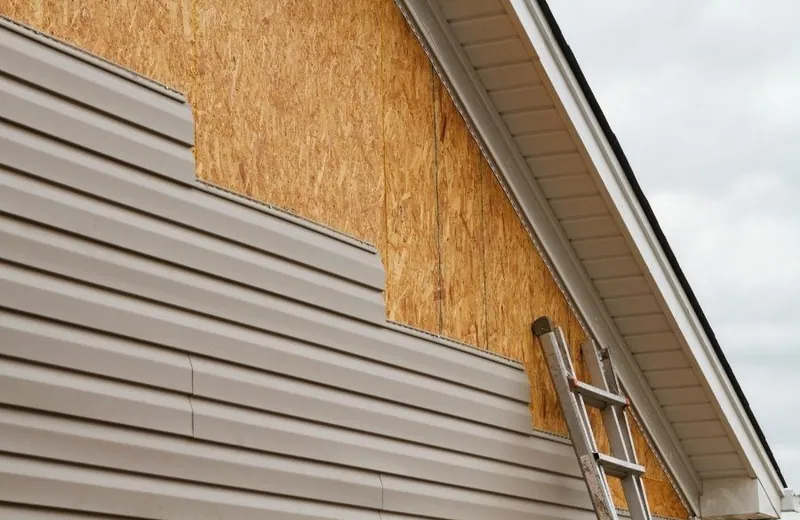
This is rot in the plywood, OSB, or board sheathing behind the siding, and sometimes in the sill plate the wall sits on. From the street, the siding can look fine while the structure behind it is soft or crumbling.

Why it happens here

Atlanta's long humid stretches keep wall cavities damp, and storms push rain past aging caulk and trim. Many 1920s bungalows were built with no housewrap at all. Many 1980s–90s homes have OSB with very little protection. Missing kick-out flashing at roof-wall intersections sends water straight into the wall, and clogged gutters under the tree canopy overflow onto the siding. Rot like this often goes unnoticed for years until the old siding comes off.

Signs to watch for
  • Soft or spongy spots when you press on the siding
  • Rippling or bowing courses
  • Stains below roof-wall intersections
  • Peeling paint on interior walls next to exterior walls
  • Musty smells in closets on outside walls
  • Floor sag along exterior walls
Local patterns

We find this most often on Kirkwood, Grant Park, and West End bungalows, and on 1980s–90s subdivision homes in Smyrna and Chamblee. It's worst under windows and below gutters on shaded elevations.

Our fix

We remove the siding, cut out and replace the rotted sheathing or sill sections, install a new water-resistive barrier and flashing, then re-side. Repairs are priced per unit so you know the cost up front.

Swelling and Delaminating Hardboard Siding

Serious

Hardboard siding from the 1980s and 90s, including Masonite and early Louisiana-Pacific products, is made of pressed wood fibers. Once water gets in, it swells, flakes apart in layers, and eventually turns to mush at the edges.

Why it happens here

Hardboard only stays protected while its paint and caulk are intact. Atlanta's humidity, 50 inches of rain, and repeated winter freeze-thaw cycles break that protection down quickly. Drip edges and butt joints absorb water, swell, and pull away from the wall. Once a board starts to swell, painting over it won't fix it, and the damage spreads to neighboring boards and the OSB behind them.

Signs to watch for
  • Swollen, mushroomed bottom edges
  • Bubbling or flaking surface
  • Visible fiber texture where paint has failed
  • Gaps and lifted ends at butt joints
  • Fungus or soft spots near grade
  • Nail heads sunk into soft board
Local patterns

Common in 1980s–90s neighborhoods around Smyrna, North Druid Hills, Chamblee, and parts of East Point. It's usually worst on north and east walls shaded by mature trees.

Our fix

Full replacement is usually best. We remove the hardboard, repair the sheathing, add proper housewrap, and install fiber cement or engineered wood that stands up to Atlanta moisture.

Storm, Hail, and Wind Damage

Emergency

This covers panels blown off or cracked, dents from hail, and impact damage from falling limbs. It leaves openings where wind-driven rain can get straight into the wall.

Why it happens here

Metro Atlanta gets hail several times a year in the March–May severe-weather season. Hurricane remnants like Zeta and straight-line winds rip off loose, aging panels. The dense canopy that earned Atlanta the nickname 'City in a Forest' also means falling limbs. Brittle aluminum and early vinyl on mid-century ranches crack easily, and after big storms, out-of-state storm chasers show up looking for quick insurance work.

Signs to watch for
  • Missing or flapping panels
  • Round dents in aluminum or metal
  • Cracked or holed vinyl, often on the windward side
  • Limb impact marks or punctures
  • Water stains inside after storms
  • Loose J-channel or trim
Local patterns

Ranch neighborhoods in Forest Park, Hapeville, College Park, and Belvedere Park often have older aluminum and vinyl. Wooded lots in Vinings and Brookhaven take more limb strikes.

Our fix

We cover openings quickly, photograph and document the damage for your insurance claim, match the existing profile and color where possible, and repair or re-side the affected elevations.

Rotted Trim, Corner Boards, and Fascia

Moderate

This is decay in window and door casings, corner boards, fascia, and rake boards. These are the wood parts that frame the siding and handle the most water runoff.

Why it happens here

Trim and fascia sit right where water collects, behind gutters, under windows, and at the bottom of corners. Atlanta's frequent rain, overflowing leaf-clogged gutters, and damp shade keep that wood wet. Freeze-thaw cycles then open joints and split paint. Clay soils shrink and swell, shifting foundations enough to open gaps at corner boards and let more water in.

Signs to watch for
  • Soft wood you can push a screwdriver into
  • Peeling or blistered paint on trim
  • Gaps between trim and siding
  • Fascia sagging behind gutters
  • Dark staining at corners
  • Gutters pulling away from the house
Local patterns

Found on almost every house type, but especially Craftsman bungalows in Candler Park and East Atlanta Village and older ranches in East Point. Fascia behind gutters under oak and pine canopy is a constant trouble spot.

Our fix

We replace rotted trim and fascia with rot-resistant PVC or fiber cement trim, or with matching wood where historic rules require it, and we seal and flash every joint properly.

Carpenter Bee and Termite Damage

Moderate

Carpenter bees drill perfectly round half-inch holes into fascia and trim. Subterranean and Formosan termites eat wood siding and framing from the ground up.

Why it happens here

Georgia is a very heavy termite-pressure state. Wood siding that sits close to grade, often below today's clearance standards on older homes, gives termites an easy path in. Carpenter bees go after unpainted or weathered softwood fascia every spring, and woodpeckers often tear open the trim afterward to get at the larvae.

Signs to watch for
  • Round holes on the undersides of fascia or trim
  • Sawdust piles below
  • Yellow staining under the holes
  • Mud tubes on foundations
  • Hollow-sounding siding near grade
  • Woodpecker damage in trim
Local patterns

We see it constantly on cedar and pine trim in Decatur's Oakhurst, Avondale Estates, and Scottdale, and on wood-sided lower courses of older ranches in Candler-McAfee and Panthersville.

Our fix

We remove the damaged wood, coordinate with your pest control provider, restore proper grade clearance, and install fiber cement or PVC trim that bees and termites can't eat.

Mildew, Algae, and Red Clay Staining

Minor

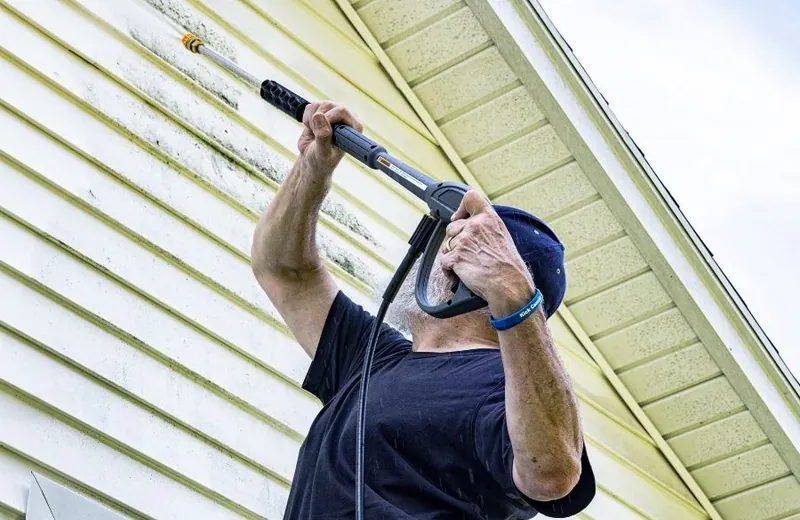
This means green or black growth on shaded walls and orange staining along the lower courses where red Georgia clay splashes up during rain.

Why it happens here

Under the tree canopy, many walls hardly ever dry out completely. Combined with Atlanta's dew points, that creates good conditions for mildew and algae. Heavy rain on bare clay beds splashes orange soil onto the bottom few feet of siding. Most of this is cosmetic, but constant dampness shortens paint life and can hide early rot.

Signs to watch for
  • Green film on north-facing walls
  • Black specks on trim
  • Orange band along the bottom courses
  • Moss in shaded corners
  • Chalky, faded paint
  • Stains that come back after washing
Local patterns

Heavily shaded lots in Druid Hills, Morningside, Virginia-Highland, and Vinings are the worst. Clay staining shows up wherever beds are bare or downspouts dump water near the foundation.

Our fix

We assess whether it's a surface issue or an early moisture problem, correct grade clearance, and recommend materials with factory finishes, like ColorPlus Hardie, that resist growth.

Brittle, Faded, or Warped Vinyl and Aluminum

Minor

This is older vinyl or aluminum siding that has chalked, faded, buckled from heat, cracked from cold impacts, or worked loose from its fasteners.

Why it happens here

Atlanta's strong UV and long hot season break down cheap vinyl. Dark colors warp on south and west walls, and reflections from neighbors' low-E windows can melt localized spots. Aluminum installed over mid-century homes in the 1960s–70s is now dented and chalky. Brittle panels crack when hail hits them cold, and discontinued colors make patch repairs hard to blend.

Signs to watch for
  • Wavy or buckled panels
  • Chalky residue on your hand
  • Uneven fading between walls
  • Panels sliding loose
  • Cracks around fasteners
  • Melt marks shaped like window reflections
Local patterns

Very common on ranches in Forest Park, College Park, Hapeville, Clarkston, and Belvedere Park, and on 1990s subdivisions in Smyrna and Chamblee where builder-grade vinyl was standard.

Our fix

For small areas, we source the closest matching profile and color. When patches won't blend, we recommend re-siding with heavier insulated vinyl or fiber cement.

What We Do

Siding Services for Atlanta Homes and Investment Properties

We match the material to the house, the budget, and the rules that apply. That might be smooth fiber cement on a Grant Park bungalow, insulated vinyl on a College Park ranch, or board-and-batten on a Brookhaven farmhouse build. Every service below includes clear pricing and proper flashing, plus a clean job site.

Siding Installation

Complete exterior siding installation for new construction, additions, and full re-siding projects on homes across metro Atlanta.

Our approach

We install a water-resistive barrier, flash every opening, add kick-out flashing, and keep proper clearance above grade, all per manufacturer instructions and Georgia's IRC requirements.

In Atlanta, GA

These details protect against wind-driven summer storms and Atlanta's year-round humidity, the two main reasons siding fails here.

Best for

Homeowners and builders who want a complete, code-compliant exterior from the sheathing out.

Vinyl Siding Installation

We install quality vinyl siding, including insulated vinyl for added comfort and lower energy loss.

Our approach

Fastened loose so panels can expand, with heavier panels and lighter, heat-stable colors to resist warping.

In Atlanta, GA

A good fit for budget-minded owners in East Point, Forest Park, and Hapeville. We steer you away from thin, dark vinyl that warps in Atlanta heat.

Best for

Ranches, rentals, and owners who want low maintenance at a lower cost.

Specialty

Fiber Cement Siding Installation

We install fiber cement lap, panel, and shingle siding that resists rot, termites, and fire.

Our approach

Gapped joints, flashed butt joints, 6-inch grade clearance, and careful cutting with dust control.

In Atlanta, GA

Fiber cement stands up to humidity, termite pressure, and hail far better than wood or hardboard. Smooth-faced boards can match historic reveals and may be approved on secondary elevations in Atlanta's historic districts.

Best for

Long-term owners, intown renovations, and anyone replacing failed hardboard.

Specialty

James Hardie Siding Installation

We install James Hardie lap, panel, shingle, and board-and-batten products, including ColorPlus factory finishes.

Our approach

Installed according to Hardie's installation instructions, with correct clearances, flashing, and fastening.

In Atlanta, GA

Hardie is the standard on new infill in Brookhaven, Decatur, and Vinings, and ColorPlus finishes hold up against Atlanta UV much longer than field paint.

Best for

Homeowners who want durability and design, and who care about resale value.

Board and Batten Siding Installation

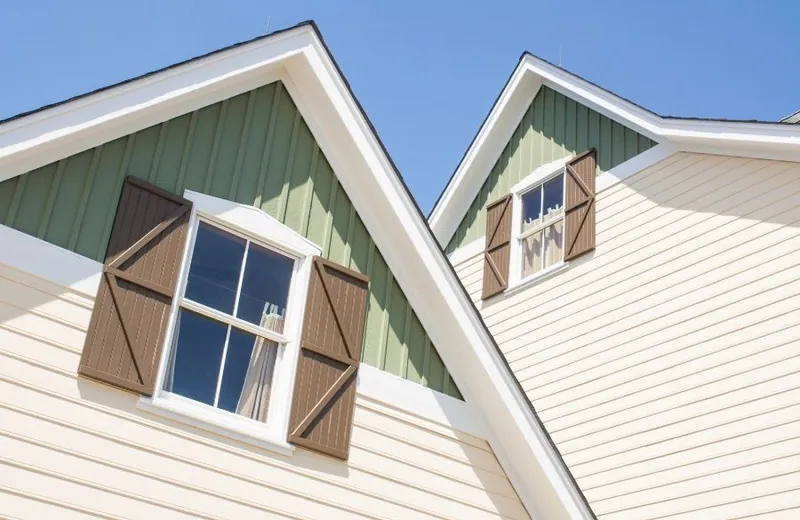
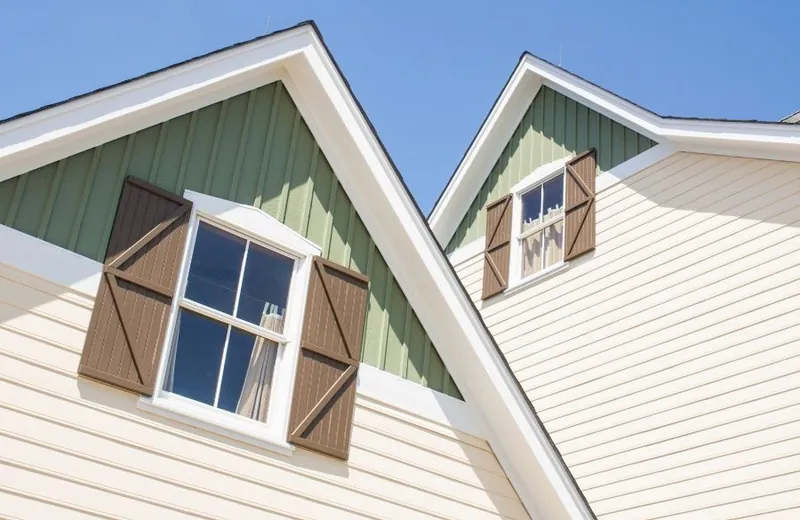
We install vertical board-and-batten siding as a full façade or as an accent on gables and bump-outs.

Our approach

Fiber cement, engineered wood, or real wood with even batten spacing and flashed horizontal transitions.

In Atlanta, GA

Popular for modern farmhouse builds in Smyrna and Brookhaven and for updated ranches in Chamblee.

Best for

Design-forward owners who want a modern farmhouse look.

Wood Siding Installation

We install new wood clapboard and repair existing wood clapboard, matching original profiles and exposures.

Our approach

Primed on all sides before install, with back-ventilation details where suitable and properly sealed end cuts.

In Atlanta, GA

Often the only material approved for front elevations in Inman Park, Grant Park, and other Atlanta historic districts.

Best for

Historic homes and owners who want authentic materials.

Metal Siding Installation

We install steel siding and standing-seam metal wall panels for homes and accent walls.

Our approach

Concealed-fastener panels where possible, with flashed transitions and trim that allows for expansion.

In Atlanta, GA

Steel holds up better to hail than aluminum and fits modern infill designs on intown lots.

Best for

Contemporary homes, accent walls, and outbuildings.

Cedar Siding Installation

We install cedar lap, bevel, and tongue-and-groove siding with a natural or painted finish.

Our approach

Stainless or hot-dipped fasteners, back-primed boards, and proper clearance above grade.

In Atlanta, GA

Cedar suits Craftsman homes in Candler Park and Oakhurst, but under Atlanta's canopy it needs regular finish maintenance.

Best for

Owners who value natural wood character.

Hardie Plank Siding Installation

We install HardiePlank lap siding in smooth or wood-grain textures and a range of exposures.

Our approach

Blind or face nailing per spec, with flashed butt joints and caulked trim gaps.

In Atlanta, GA

Smooth plank with the right reveal can stand in for old clapboard on a bungalow while holding up to humidity and termites.

Best for

Replacing worn wood or hardboard lap siding.

Hardie Board Installation

We install HardiePanel and HardieTrim boards for vertical panels, trim, and accents.

Our approach

Panels laid out with the seams planned in advance, flashed horizontal joints, and trim sealed properly.

In Atlanta, GA

A common choice for the mixed-material façades on new Brookhaven and Vinings homes.

Best for

Panel accents and low-maintenance trim.

Engineered Wood Siding Installation

We install engineered wood lap and panel siding, which is lighter than fiber cement and has a wood look.

Our approach

Sealed edges and cuts, proper spacing, and grade and roof clearances per the manufacturer.

In Atlanta, GA

A cost-effective, durable upgrade for investors in Scottdale, Candler-McAfee, and Panthersville.

Best for

Budget-conscious owners who want a wood appearance.

Aluminum Siding Installation

We repair, replace, and match aluminum siding on existing homes.

Our approach

We source compatible profiles and blend repairs on the elevations where they'll show least.

In Atlanta, GA

Many 1960s ranches in Forest Park and College Park still have aluminum, and we keep it serviceable or plan the switch to another material.

Best for

Owners keeping existing aluminum exteriors.

Siding Replacement Services

We tear off failed siding and replace it with the right material for the house.

Our approach

Full removal, sheathing inspection, unit-priced rot repair, new housewrap, and flashing.

In Atlanta, GA

This is how we find hidden rot on 1920s homes and 1990s hardboard homes before it gets worse.

Best for

Homes with widespread rot, hardboard, or failed vinyl.

Siding Repair Services

Targeted repair of damaged, rotted, or storm-hit sections of siding.

Our approach

We match the profile, color, and reveal, and replace the flashing behind every repair.

In Atlanta, GA

Ideal for hail and limb damage after spring storms, with photo documentation for your insurance claim.

Best for

Localized damage on otherwise sound exteriors.

Board and Batten Exterior Installation

Whole-exterior board-and-batten makeovers, including trim and soffit coordination.

Our approach

Batten layout planned around windows, with transitions to brick or stone.

In Atlanta, GA

Turns a dated brick-and-siding ranch in Chamblee or Smyrna into a modern-looking home.

Best for

Full-exterior design transformations.

Vertical Siding Installation

We install vertical panel and plank siding systems.

Our approach

Furring or blocking as required, with Z-flashing at horizontal seams.

In Atlanta, GA

Fits contemporary infill on narrow intown lots, where it emphasizes height.

Best for

Modern designs and accent elevations.

Stone Veneer Siding Installation

We install manufactured stone veneer for wainscots, columns, and accent walls.

Our approach

A drainage plane, weep screed, and clearance above grade and paving.

In Atlanta, GA

A stone wainscot also covers the lower courses where red clay stains siding.

Best for

Curb appeal upgrades and protecting lower walls.

Soffit and Fascia Installation

We replace rotted fascia and install vented soffits.

Our approach

Aluminum, vinyl, fiber cement, or wood, with balanced intake ventilation for the attic.

In Atlanta, GA

Fixes fascia rot from canopy-clogged gutters and seals out carpenter bees and wildlife.

Best for

Homes with sagging gutters or rotted eaves.

Exterior Trim Installation

We rebuild window and door casings, corner boards, and frieze boards.

Our approach

PVC, fiber cement, or wood trim, with head flashing and sealed joints.

In Atlanta, GA

Fixes the moisture damage under windows that we see on nearly every older Atlanta home.

Best for

Rotted or bee-damaged trim.

Siding Inspection and Consultation

An on-site evaluation of siding, trim, and moisture conditions.

Our approach

Probing, moisture checks, and photo documentation, followed by a written scope.

In Atlanta, GA

Helps you decide between repair and replacement, check historic district requirements, and document storm damage.

Best for

Buyers, sellers, investors, and storm-damaged homes.

Asbestos Siding Removal and Replacement

We plan the removal of asbestos-cement shingles and then re-side the home.

Our approach

Removal is handled according to EPA and Georgia EPD requirements before any new siding goes on.

In Atlanta, GA

Many post-war ranches in Brookhaven, East Point, and Belvedere Park still have these shingles.

Best for

Mid-century homes with cement shingle siding.

Mobile Home Siding Replacement

Replacement siding for manufactured and mobile homes.

Our approach

Lightweight vinyl or metal panels, with the wall checked and repaired where needed.

In Atlanta, GA

An affordable fix for weathered, storm-damaged manufactured homes on the south side.

Best for

Manufactured home owners and park investors.

Commercial Siding Installation

Siding for small commercial buildings, multifamily, and mixed-use properties.

Our approach

Phased work to keep tenants operating, with durable, code-compliant materials.

In Atlanta, GA

Serves retail strips, rental duplexes, and small apartment buildings across the metro.

Best for

Property managers and commercial owners.

Cedar Shake Siding Installation

We install cedar shake and shingle siding, and fiber cement shake alternatives.

Our approach

Correct exposure, staggered joints, and stainless fasteners.

In Atlanta, GA

Matches the wood shingle gables on Queen Annes and bungalows in Inman Park and Grant Park.

Best for

Gables, accents, and historic shingle details.

Modern Siding Installation

Contemporary mixed-material façades combining panels, lap, metal, and wood accents.

Our approach

Detailed transitions between materials, with each material flashed correctly.

In Atlanta, GA

Designed for new infill homes in Decatur, Vinings, and intown Atlanta.

Best for

Architect-driven and modern-style homes.
Simple & Transparent

Our Siding Process, From Inspection to Final Walkthrough

Five steps, clear communication, and no surprises. Here's what happens from your first call through the final cleanup.

Inspection and Moisture Assessment

  • Walk every elevation and probe trim, sills, and lower courses
  • Check for missing kick-out flashing, gutter overflow, and grade clearance
  • Photograph damage, including storm damage for insurance
  • Note the home's age for lead paint and possible asbestos

We check whether the home sits in an Atlanta, DeKalb, Decatur, or Avondale Estates historic district or is governed by an HOA.

Usually within a few days of your call; visit takes 45–90 minutes

Clear, Itemized Proposal

  • Material options with honest pros and cons
  • Line-item pricing for siding, trim, soffit, and fascia
  • Per-unit pricing for any hidden rot, so you know the cost before we start
  • Timeline estimate and permit plan

South-side budgets and investor goals are different from intown design goals, so we price options for both.

Typically within 2–4 business days

Permits and Approvals

  • Determine which city or county office has jurisdiction
  • Prepare permit documents when sheathing or structural work is involved
  • Help with Certificate of Appropriateness or HOA submittals
  • Order materials and confirm colors

Brookhaven, Smyrna, East Point, and the other cities each run their own permit offices, and Vinings falls under unincorporated Cobb County.

A few days for standard permits; historic reviews can take several weeks

Installation

  • Protect landscaping, windows, and driveways
  • Remove old siding and repair rotted sheathing
  • Install water-resistive barrier, flashing, and new siding
  • Tidy the site at the end of every workday

Steep lots in Smyrna and Vinings and tight intown setbacks need careful staging, and we plan around spring storm weather.

Most homes take 1–2 weeks; repairs take 1–3 days

Final Walkthrough and Cleanup

  • Walk the house with you, elevation by elevation
  • Finish touch-ups and caulking
  • Magnetic sweep for nails and full debris removal
  • Share care tips for your new siding

We point out where clay splash, gutters, or tree limbs could affect your siding going forward.

Final day of the project
The Atlanta Siding & Exterior Specialists Difference

Why Atlanta Homeowners and Investors Choose Us

We Know Atlanta's Housing, Era by Era

A 1915 Grant Park bungalow, a 1955 East Point ranch, and a 1994 Smyrna hardboard home all need different repairs. We know where old-growth clapboard rots, where hardboard swells, and where asbestos shingles hide under aluminum. We also know how humidity, canopy shade, red clay, and termites affect each material. That lets us recommend siding that will hold up on your specific house instead of a one-size-fits-all product, and it lets us spot problems other contractors miss during the estimate.

Bonded and Insured for Your Protection

Atlanta Siding & Exterior Specialists is bonded and insured. Siding work means ladders, scaffolding, and power tools around your home and your neighbors' homes. If something goes wrong, you shouldn't be the one paying for it. Before any work begins, ask us for our documentation and we'll gladly provide it. After big storms, plenty of out-of-town crews show up with no local accountability. We're based here and we'll still be here when the job is done.

Clear Pricing, Including Hidden Rot

Hidden rot is common in Atlanta, especially on 1920s homes and 1980s–90s hardboard homes. Some contractors use it to pad the bill partway through the job. We don't. Our proposals list every line item and include per-unit prices for sheathing, sill, and trim repairs, so if we open a wall and find damage, you already know what it costs. We'll show you photos before we replace anything. You get a straightforward number with no pressure.

Siding Is What We Do

We focus on exteriors: siding, trim, corner boards, soffit, and fascia. We work with vinyl, insulated vinyl, fiber cement, James Hardie, engineered wood, cedar, metal, and stone veneer. Because siding is our specialty, we get the details right. That means kick-out flashing, head flashing over windows, clearance above grade, and properly gapped joints. These details are what keep Atlanta's wind-driven rain out of your walls.

Character-Preserving Options for Older Homes

Many south-side and intown homes still have original wood siding that has taken decades of humidity and storms. We offer durable replacements that keep the home's character, like smooth fiber cement with a matching reveal, rebuilt corner boards, and profile-matched trim. For homes in Inman Park, Druid Hills, Avondale Estates, or Decatur's historic districts, we'll help you understand what the review board is likely to accept before you commit.

Fast Turnaround for Investors

For investors renovating in Scottdale, Candler-McAfee, Forest Park, or East Point, every day a property sits empty costs money. We schedule investor projects efficiently, recommend cost-effective materials that appraise and rent well, and keep the crew on site until the job is done. You get consistent pricing across multiple properties and a contractor who answers the phone.

Tidy, Organized Job Sites

Intown lots are tight and neighbors notice. We protect landscaping and AC units, stage materials neatly, and clean up at the end of every workday. Nails get picked up with a magnetic sweep, and old siding is hauled away. You won't come home to a yard full of debris or a crew that disappeared halfway through the job.

Trusted Locally

A Bonded, Insured Siding Contractor Atlanta Can Count On

Atlanta homeowners find contractors through neighbors, Nextdoor, and neighborhood listservs, so how we treat each home matters. Clear pricing, clean job sites, and crews that stay until the job is done are how we want to be known.

25
Siding & Exterior Services Offered
18+
Metro Atlanta Communities Served
100%
Bonded & Insured Crews
BondedInsured
Where We Work

Siding Services Across Atlanta, DeKalb, and the South Side

Our crews work across intown Atlanta, central DeKalb, the airport-area cities, and the north and northwest suburbs. Each area has its own housing stock and its own permit office, and we know the differences.

Intown Atlanta and Historic Eastside

AtlantaDruid HillsDecaturAvondale EstatesNorth Druid Hills

South Side and Airport Area

East PointCollege ParkHapevilleForest Park

Central and South DeKalb

Candler-McAfeeBelvedere ParkPanthersvilleScottdaleClarkston

North and Northwest Metro

BrookhavenChambleeSmyrnaVinings

We also serve Union City and nearby communities. If you don't see your neighborhood listed, contact us and we'll confirm coverage. Not sure if we cover your area? Call (470) 470-8341.

Transparent Pricing

How Much Does Siding Cost in Atlanta?

Siding costs in Atlanta depend on the material, the size of the house, what turns up behind the old siding, and which rules apply to your property. Here are the factors that move the price and some realistic ranges for local projects.

Primary Factor

Siding Material

Material has the biggest effect on price. Standard vinyl is usually the least expensive installed option. Insulated vinyl and engineered wood fall in the middle. Fiber cement and James Hardie cost more because of the material and the labor to install it, and ColorPlus factory finishes add to that. Cedar, real wood clapboard, metal, and stone veneer are at the high end. In Atlanta's climate, the cheapest material can cost more over time if it warps, cracks in hail, or needs repainting every 5–8 years.

Primary Factor

Hidden Rot and Sheathing Repair

Sheathing and sill rot is the most common surprise on Atlanta jobs, especially on 1920s bungalows and 1980s–90s hardboard homes. Replacing a few sheets of sheathing adds a modest amount. Extensive sill plate or framing repair can add thousands. That's why we include per-unit repair pricing in every proposal, so you can budget for the worst case and pay only for what we actually find.

Secondary Factor

Home Size, Height, and Site Access

Square footage of wall area sets the baseline, but access matters too. Two-story walls need scaffolding or lifts. Steep yards in Smyrna, Vinings, and Brookhaven make staging harder, and narrow intown side setbacks slow material handling and debris removal. Lots of gables, dormers, and windows mean more cuts, more trim, and more flashing, which raises labor costs compared with a simple one-story ranch.

Secondary Factor

Lead Paint and Asbestos

Most intown homes were built before 1978, so disturbing painted surfaces falls under EPA lead-safe (RRP) work practices, which add containment and cleanup steps. Many mid-century ranches have asbestos-cement shingles, and removing them must follow EPA and Georgia EPD rules. Both add cost, but skipping them puts your family and your neighbors at risk.

Variable Factor

Permits, Historic Review, and Trim Scope

Permit fees vary by city. Historic district projects may require specific materials, like real wood or smooth fiber cement with matching reveals, and approvals can extend the timeline. Adding soffit, fascia, corner boards, and window trim replacement increases the total but finishes the job properly, since rotted trim next to new siding will just fail again.

Typical projectDetailsEstimated range
Storm or hail repairReplacing damaged vinyl or aluminum on one or two elevations of a ranch, color-matched where available$800 – $4,500
Vinyl re-side on a south-side ranchAbout 1,500 sq ft of wall area in East Point or Forest Park; insulated vinyl, new housewrap, trim wrap$11,000 – $20,000
Hardboard to fiber cement replacementAbout 2,200 sq ft two-story 1990s home in Smyrna or Chamblee; sheathing repairs, new trim, painted or ColorPlus finish$26,000 – $45,000
Historic bungalow siding and trim restoration1920s Kirkwood or Grant Park home; partial wood or smooth fiber cement replacement, sill repair, rebuilt trim, lead-safe practices$12,000 – $35,000

Ask us about phasing larger projects, like doing the worst elevations first, to fit your budget. Durable siding that sheds water protects the structure behind it, cuts repainting cycles, and improves curb appeal. In fast-appreciating Atlanta neighborhoods, that helps resale value and helps rentals stay leased.

Questions & Answers

Siding Questions Atlanta Homeowners Ask Us

How much does it cost to replace siding on a house in Atlanta?

Most full re-siding projects in Atlanta fall somewhere between about $11,000 and $45,000. Vinyl on a one-story south-side ranch is at the low end. Fiber cement on a two-story home is at the high end. Material choice, wall area, height, site access, and hidden rot are the biggest variables. Lead-safe practices on pre-1978 homes and asbestos shingle removal on mid-century ranches add cost. Smaller storm repairs often run $800 to $4,500. We give you an itemized proposal with per-unit prices for any rot repair, so you aren't guessing about the final number.

How long does a siding replacement take?

Most single-family re-siding jobs take one to two weeks of on-site work once materials arrive. A small repair might be done in a day or two. Bigger homes, two-story walls, steep lots in Smyrna or Vinings, and extensive sheathing repair can stretch the timeline. Permits usually add a few days. Historic district reviews in Atlanta, Druid Hills, Decatur, or Avondale Estates can add several weeks. Spring storm season also affects scheduling, so if your project isn't an emergency, booking in late summer, fall, or winter often helps.

Do I need a permit to replace siding in Atlanta?

It depends on the scope and the location. The City of Atlanta generally requires a building permit when re-siding involves sheathing or structural repair, and straight cosmetic replacement may be treated more leniently. If you're in a historic district like Inman Park, Grant Park, West End, or Druid Hills, material changes need a Certificate of Appropriateness. Brookhaven, Smyrna, Decatur, East Point, and the other cities each have their own rules, and HOAs may regulate color and material. We confirm the requirements for your address before work starts.

Can I put vinyl or fiber cement on a historic Atlanta home?

Vinyl over original wood clapboard is typically discouraged or denied in Atlanta's historic and landmark districts. Smooth-faced fiber cement with a reveal and exposure matching the original siding may be considered, mostly on secondary elevations or new additions. Front elevations often need repaired or replacement wood. Druid Hills (under both Atlanta and DeKalb), Decatur's local districts, and Avondale Estates each have their own review. We'll walk you through realistic options and help put together your submittal.

Is fiber cement better than vinyl for Atlanta's climate?

For most long-term owners, yes. Fiber cement doesn't rot, termites won't eat it, it resists fire, and it handles hail and heat better than standard vinyl, which can warp on sunny walls and crack when hail hits it cold. Vinyl costs less up front and never needs paint, so insulated vinyl in a light color is still a smart choice for many budget-conscious homes and rentals. Engineered wood falls in between. We'll compare all three for your house and goals.

How do I know if my siding needs repair or full replacement?

Repair makes sense when the damage is limited to a few areas and the rest of the siding and sheathing is sound. Replacement is usually better when you see swelling hardboard on several walls, widespread soft spots, brittle or chalky vinyl that cracks easily, or discontinued colors that won't blend with patches. Repeated paint failure on wood every few years is another sign. During our inspection we probe the suspect areas and show you photos, so the decision is based on what's actually there.

How can I prevent siding damage in Atlanta?

Start with water management. Clean gutters at least twice a year, more often under oaks and pines, and make sure downspouts carry water away from the foundation. Keep soil and mulch at least six inches below fiber cement siding to stop clay splash and termite access. Trim branches back from walls and the roof. Recaulk window and trim joints when they crack, and wash shaded walls to remove mildew. Check fascia for carpenter bee holes every spring. Make sure kick-out flashing is installed where roofs meet walls.

When should I call right away instead of waiting?

Call quickly after hail or wind tears off or cracks panels, after a limb strikes the house, or if you see water stains inside on exterior walls. Open siding lets Atlanta's frequent rain soak the sheathing within days. Soft, spongy spots, a sagging fascia that's pulling gutters loose, mud tubes near the foundation, or swollen hardboard also shouldn't wait, because the repair cost goes up the longer water gets in. For storm damage, document it with photos and call before hiring an out-of-town crew.

Find Us

Serving Atlanta, GA & Nearby

5436 Riverdale Rd Suite 127-A, Atlanta, GA, 30349

Ready When You Are

Get a Clear Siding Estimate for Your Atlanta Home

Whether it's a rotted corner board, hail-cracked vinyl, or a full Hardie re-side, we'll tell you what's going on behind your siding and what it'll cost to fix, before any work starts.

  • On-site inspection with photos of what we find
  • Itemized proposal with per-unit pricing for hidden rot
  • Honest material recommendations for Atlanta's climate
  • Help with permits, historic reviews, and HOA requirements
  • Storm damage documentation for insurance claims
  • A bonded, insured crew and a tidy, organized job site
  • Quick turnaround for investor and rental projects

Serving Atlanta, Decatur, Druid Hills, Avondale Estates, Brookhaven, Chamblee, Smyrna, Vinings, East Point, College Park, Hapeville, Forest Park, Union City, and surrounding DeKalb communities.

Storm just hit? If panels are missing or a limb has opened your wall, contact us so we can get the opening covered and the damage documented.

Bonded · Insured

Atlanta Siding & Exterior Specialists Free estimates across Atlanta, GA